$0.00


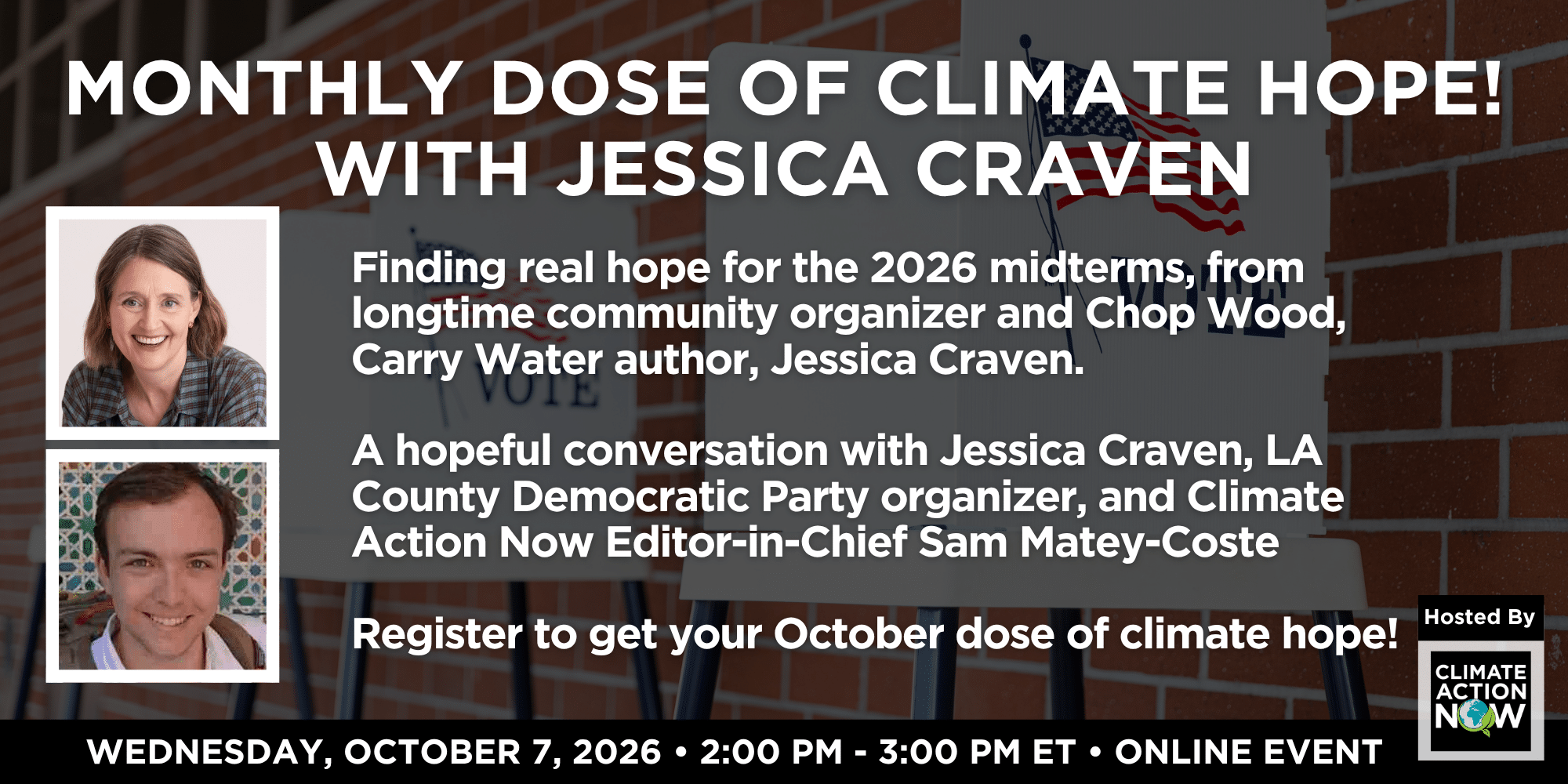
Our recent conversation with Jessica Craven, community organizer and author of the Chop Wood, Carry Water newsletter, explored how the climate crisis is shaping the 2026 midterm elections and why hope is something we build through action. We discussed how high gas and diesel prices, pollution, and corruption are opening new conversations with voters in traditionally conservative states like Iowa, Kansas, Ohio, and Texas, and how renewable energy offers a path toward affordability and independence. Jessica also shared why personal outreach to friends and neighbors can cut through misinformation in ways mass media can’t, and how staying focused on wins keeps people-powered movements going for the long haul.
Watch a recording of the conversation (1 hour) or read a quick recap.
Recording
Quick recap
The meeting was a discussion with Jessica Craven, community organizer and author of the Substack, Chop Wood, Carry Water, in conversation with Climate Action Now’s Sam Matey-Coste, about where the climate crisis meets the 2026 midterm elections. Participants explored how fossil fuel dependence creates economic and strategic vulnerability, how high fuel prices, corruption, and water contamination in Iowa are shifting voters in traditionally conservative areas, and why personal outreach like “friend banking” can counter negative campaigning and misinformation. The conversation also touched on election security, the importance of early voting, and the case for a durable Democratic majority to carry out climate and democratic reforms. It closed on Jessica’s conviction that taking action is what generates hope. The session opened with a community action on the CAN Action Carousel, as Climate Action Now celebrated reaching 5 million actions and more than 650,000 trees planted.
Disclaimer: This is an auto-generated meeting summary from Zoom, offering a high-level overview of the discussion. Please note that it may not capture all details with perfect accuracy.
Summary
A Midterm With Historic Stakes
Jessica described the 2026 midterms as potentially the most important since 1862, but her outlook was far from grim. She highlighted the courage of resistance groups quietly organizing under the radar, often without recognition, and pointed to encouraging signs in voter turnout and engagement across party lines. For Jessica, the stakes of this election are a reason to show up rather than a reason to despair. The work being done now by ordinary people, she suggested, is laying the groundwork for what comes after November.
Fossil Fuels Are a Liability, Not a Strength
Sam pointed to what he called the “fragility of fossil fuels,” and Jessica agreed that recent events have made the case plainly. Geopolitical tensions, including the conflict in the Strait of Hormuz, are accelerating the shift toward wind and solar. Interest in fossil fuel leases is declining while investment in solar and battery storage grows. Jessica noted that Americans are tired of endless wars and rising costs, and that the link between fossil fuel dependence and political corruption is becoming easier for voters to see.
Kitchen-Table Issues Are Moving Conservative Voters
In rural and traditionally conservative states like Iowa, Kansas, Ohio, and Texas, Jessica sees a shift taking shape. High diesel and gas prices, cancer-causing chemicals, water pollution, hospital closures, and rising food costs are all weighing on voters. Strong candidates are running in these states and speaking directly to local concerns. Jessica noted that today’s energy challenges make it easier to reach people on economic grounds rather than environmental ones, and that the combination of corruption, pollution, high prices, and war could drive real change.
Your Friends Are the Most Persuasive Messengers
Jessica argued that trusted personal connections outperform mass media, especially when opponents have more money for ads. She championed “friend banking,” reaching out directly to people you know, along with sharing voter guides and helping friends with the practical logistics of voting. Direct engagement through phone calls and door-to-door canvassing still matters, she said, particularly in key states like Maine. Positive polls are encouraging, but they don’t replace the work of making sure every supporter actually casts a ballot.
Hope Is Something You Do
Jessica’s core message was that action generates hope, not the other way around. Her newsletter deliberately highlights wins so readers can see what their collective efforts have achieved, and that visible progress keeps people engaged over the long term. She also offered calm reassurance on election security, noting that legal and organizational preparations are in place to protect the vote, and encouraged everyone to vote early. Change happens when ordinary people keep showing up, one doable action at a time.